
Social media management: what it includes and why your business needs it
What social media management is, what it includes and how to tell whether you need it.
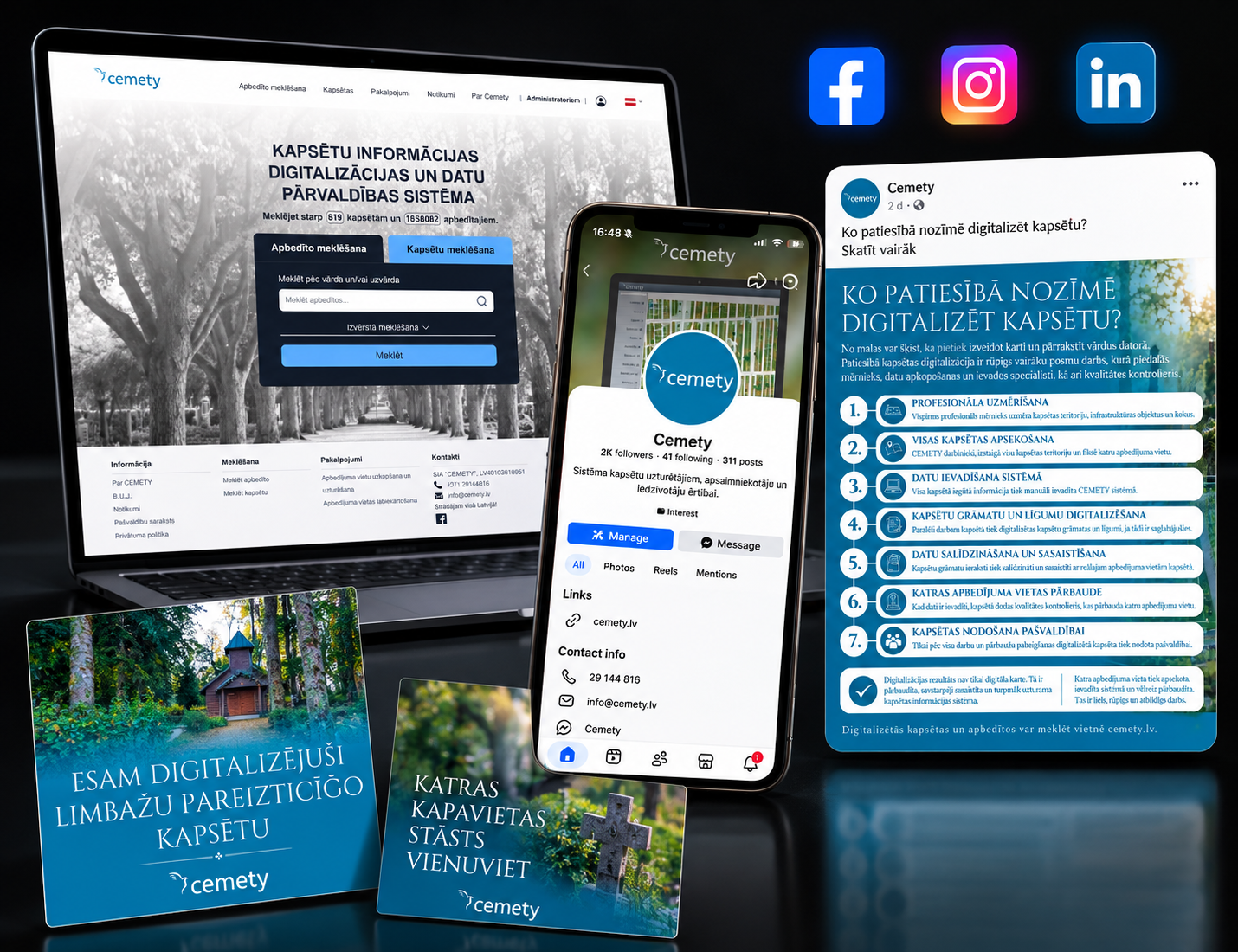
Today, social media is one of the first places where customers get to know a business. Before sending a message or calling, people often check your profile to see whether they can trust you. But posting regularly is not the same as managing social media. In this article, we explain what professional social media management involves and how to tell whether you need it.
What is social media management?
Social media management (SMM) is a systematic approach to managing a company's profiles on Facebook, Instagram, LinkedIn, TikTok and other platforms. Its aim is to increase awareness, build a community and ultimately generate demand for your products or services.
It is not just about publishing posts. It brings strategy, content, communication and analysis together in a single process.
What social media management includes
1. Strategy and goals
It all starts with answering the key questions: who is your audience, which platforms suit them, what is your brand's tone of voice and what do you want to achieve? Your goal might be sales, enquiries, recruitment or brand awareness.
2. Content plan
Consistent, well-planned content is the foundation. A content plan defines topics, formats and posting frequency to keep your profile organised.
Common content types:
- educational content that showcases your expertise;
- behind-the-scenes content and team introductions;
- customer reviews and case studies;
- product or service presentations;
- short-form videos (Reels, TikTok, Shorts).
3. Content creation
Copy, graphics, photography and video that reflect your brand's style. A consistent visual identity and tone of voice help people recognise you at a glance.
4. Publishing and community management
Scheduling posts at the best times and, just as importantly, engaging with followers. Responding to comments and messages shows that there are real people behind your brand and builds trust.
5. Paid advertising
Organic reach is limited, so many businesses complement social media management with paid campaigns. These help reach new audiences and test offers.
6. Analysis and reporting
Reach, engagement, follower growth and, most importantly, the impact on business results are reviewed regularly. The strategy is refined based on the data.
Signs you need professional social media management
- Accounts are updated inconsistently, “when there is time”.
- You are not sure what you are posting or why.
- You have followers, but no enquiries.
- Your content lacks a consistent style or does not reflect your brand image.
- Comments and messages go unanswered.
- Employees manage social media alongside other duties, creating a high risk of burnout.
In-house, with an agency or with a freelancer?
| Option | Pros | Cons |
|---|---|---|
| In-house employee | Knows the business well, responds quickly | Salary costs, one person's limited skill set |
| Freelancer | Flexibility, lower costs | Reliance on one person, limited capacity |
| Agency | A team with a range of skills (strategy, design, video, advertising) | Higher cost, time needed for initial onboarding |
The choice depends on your budget, workload and how important social media is to your sales. Many businesses choose a hybrid model: specialists handle strategy and content production, while employees take care of day-to-day communication and behind-the-scenes content.
How to choose the right platforms
Not every business needs to be on every platform. It is better to do well on two than to spread yourself thin across five.
- Facebook: a broad audience, local communities, advertising opportunities.
- Instagram: visually driven content, Reels, a younger audience.
- LinkedIn: B2B, employer branding, expert content.
- TikTok: a younger audience, creative and authentic video content.
Common mistakes
- No strategy. Content is created without a goal or direction.
- Too much self-promotion. If every post is a sales pitch, people unfollow.
- Not responding to comments and messages.
- Inconsistency. One active month, then silence.
- Chasing follower counts. A quality audience matters more than a large number.
- Ignoring analytics. Without data, you cannot know what works.
How to measure success
Choose metrics that match your goal:
- Awareness: reach, impressions, follower growth.
- Engagement: comments, saves, shares.
- Results: website clicks, enquiries, applications, sales.
It is important to assess long-term trends rather than individual posts.
Conclusion
Professional social media management helps your business stay visible, credible and accessible where your customers spend their time. It is not a one-off campaign, but a long-term process that delivers the best results when built on a clear strategy, regular high-quality content and data analysis.